Outsourced IT help desks have come a long way in the past two decades. Early on, some teams relied on spreadsheets and had limited means to manage tickets and calls. That made for a slower and often thankless process. With newer technologies like machine learning freeing up 30% of support capacity, IT technicians can reach more customers in less time. Additionally, they can provide a higher level of assistance through ticketing systems, automation, and more advanced software tools.
With the tech industry being the second biggest driver for the U.S. economy, having a reliable IT team has been key to staying competitive. They need to be up-to-date on the latest technology strategies and require diverse knowledge to handle a wide range of problems. While routine upkeep can be easier to manage, in-house teams are not always equipped to handle large-scale issues or emergencies. If your business is considering using an outsourced IT help desk, there are many advantages to keep in mind.
What Is an Outsourced IT Help Desk?
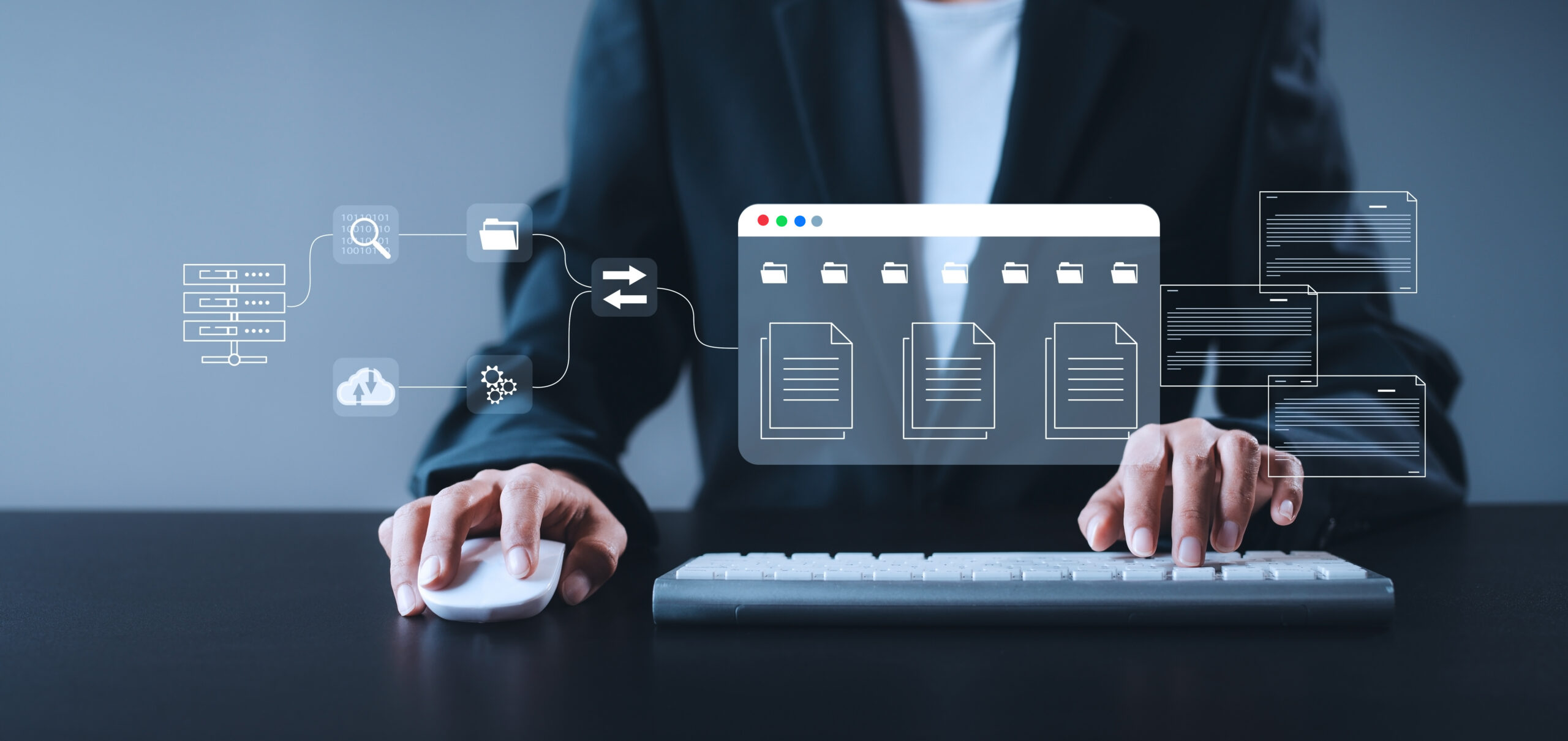
An outsourced IT help desks provide a central contact point for employees and customers to get aid with their technology questions and problems. They commonly use software to receive requests, track ongoing issues, and make it easier to find the right specialist for each inquiry. That can also include prioritization systems that ensure critical issues are handled first. Live chat is especially valuable, as businesses with a 90% or higher satisfaction rate had 13% longer chat durations than organizations with worse scores.
Larger scale help desks may layer multiple solutions. Automation and user-searchable FAQs can answer common questions. First-level technicians can help with anything not covered and escalate tickets as needed. At the second level, they’re able to solve more complex requests. Third-level technicians can handle high-level requests and have the most experience. The workflow is designed to support every level of challenge, and many can adjust their processes for clients.
What Does an Outsourced IT Help Desk Do?
An outsourced IT help desk serves a variety of roles based on the needs of each business and customer base. When someone calls, emails, or texts for help, a ticket is created that lets the IT service team line up the right technician to handle the problem. That also makes communication and notation easier between different departments. It can be sent to a high-level specialist if it’s unexpectedly tricky or requires additional expertise. Some areas they can help with include:
End-User Support
User assistance: Employees can have many types of routine and unexpected IT problems that interrupt their day. That includes low level ones, such as login issues, software questions, and device combability concerns.
User questions: Whether a new employee is being onboarded or a veteran staff member has a question, there can be a lot of technology to track. First-level staff can answer basic questions about how to use or access a specific feature.
Self-service FAQs: An experienced IT team can set up a self-service function, like a searchable FAQ, and keep it up-to-date and accurate. Up to 40% of users prefer self-help over human contact, making that another crucial part of any outsourced IT help desk.
Technical Issue Management
Troubleshooting: Some problems don’t have obvious causes. An outsourced IT help desk can dive deeper into those issues and find the root cause. From there, they can come up with the best fix and apply that wherever it’s needed.
Bug tracking: Some issues are either low priority, can linger, or unexpectedly appear ongoing. IT support software can track those to ensure they continue to get attention and progress is made to find a solution for it.
Feature requests: As a company develops new strategies and needs, capabilities are often outgrown. Staff can make submissions to ask for new features. The IT team will explore different options and find the most effective implementation.
Regardless of needs, the support process can also impact the quality of service. With 84% of consumers wanting to be treated like a person, not a number, how the help is being offered is also a factor in the effectiveness of solutions. The best outsourced IT help desks can balance practical fixes with a personable approach.
When Should You Outsource Your IT Help Desk?
Knowing when you should outsource your IT help desk depends on several factors. The best starting point is looking at the needs of your staff and customers. Compare that with the capabilities and cost of your in-house IT staff. A small team can be effective if you have mostly routine user questions and low-level IT requests. Yet, when larger issues arise, they may not have the resources to solve them.
Many businesses prefer an outsourced IT help desk since it can help lower costs and shift the IT burden onto an outsourced team. Instead of paying full-time support staff to sit and wait for people to have problems, you’re paying an IT team based on their work. Costs can come in other forms, too, as 25% of small businesses report losing $20,000 – $40,000 per hour of downtime. A quick and effective response can reduce that. Outsourced IT help desks have access to technicians at multiple levels, so no matter the size of the problem, they’re well-equipped to handle it.
What Are the Advantages of Help Desk Outsourcing Over In-house IT?
While some organizations see value in using an in-house IT help desk, there are limits to what it can offer. Hiring full-time employees is more expensive, and much of that cost comes from paying staff to be available even when there’s little to do. An outsourced IT help desk can provide the same level of service while offering added flexibility, broader expertise, and better value overall. By outsourcing, businesses can gain several clear advantages over traditional in-house IT teams:
- Scalable services: Resources can adjust to match your company’s needs, from routine user questions to complex system challenges.
- 24/7 availability: Support is always accessible, ensuring help is there whenever an issue arises.
- Lower costs: Flexible payment models, such as pay-as-you-go, reduce costs when support needs are lighter.
- Better technology: Outsourcing companies use advanced tools made affordable through serving multiple clients.
- Skilled technicians: A larger talent pool means faster resolutions and more specialized knowledge.
- Extra services: Many providers also offer managed IT, cybersecurity, and compliance support for broader coverage.
For most businesses, outsourcing an IT help desk delivers more capability at a lower cost. It ensures access to a team that can scale, adapt, and maintain quality without the overhead of an in-house staff. That balance of efficiency and expertise makes outsourcing a practical choice for long-term IT support.
Which Businesses Need IT Help Desk Outsourcing?
Whether choosing an outsourced or in-house IT help desk, they play a vital role in any technology-driven business. Most organizations benefit from having access to an IT help desk, making for an easy access point for any IT question or problem. Outsourced help desks offer scalable services and even more flexibility. They cover everything from small businesses to larger corporations.
These are some of the industries that benefit from an IT help desk:
Industries (A-E)
Arbitrage: As an industry that involves buying and reselling, many analytics tools are involved. They can have a steep learning curve and be difficult to troubleshoot, making an IT help desk valuable to keep things running smoothly.
Construction: Construction has unique challenges, using software tech to support building projects. Many workers are not expected to have IT knowledge since it’s not their primary role, making user questions a frequent challenge.
Consulting: Consulting can cover services for many types of markets. Their workflow involves tracking client relations, data, and communication. Most consulting businesses only need infrequent IT support, making an outsourced IT help desk a good choice.
Consumer-to-consumer (C2C): C2C businesses offer online platforms for consumers to buy, sell, and trade. With complicated IT compliance and countless users, IT help desks keep customers happy and prevent financial losses.
Digital goods: People buy many types of virtual products and services, such as eBooks and streaming subscriptions. Both workers and users can run into IT issues or have questions that aren’t covered in the FAQ.
Education: Education is an important industry for society. Technology has become a piece of modern teaching, with some help desk chatbots being able to answer student questions in just 2.7 seconds. Proper IT support can improve learning and free up teacher resources.
Event planning: Large-scale event planning companies handle a lot of client traffic and involve a lot of employees. That requires complex software solutions to plan, prepare, schedule, and operate. An outsourced IT help desk team can assist if something doesn’t work as expected.
Industries (H-M)
Healthcare: With medical, financial, and patient data, the healthcare industry has a lot of challenges. A quick responding help desk is essential for maintaining a high level of medical care.
Hospitality: Whether a hotel, concert hall, or country club, hospitality offers a lot of different experiences. The industry has a wide range of IT needs and challenges, making the flexibility of an outsourced IT help desk beneficial.
Financial services: Focusing on profits, financial service companies have many moving parts. When something isn’t working as expected, it can be difficult to troubleshoot, requiring expert support.
Insurance: Insurance is offered for a lot of different circumstances and needs, giving people peace of mind and aid. Some insurance companies, like healthcare, have complicated and sensitive infrastructure that can have unusual troubles and requests.
Legal: Legal firms handle a mixture of client data while maintaining IT compliance and confidentiality. IT help desk outsourcing can ensure a quick response and minimal downtime, satisfying lawyers and clients alike.
Logistics: The logistics industry is a middleman for purchasing and delivering goods. That can include multiple points of contact, software to track the flow of goods, and complex alert and communication systems.
Manufacturing: Manufacturing companies can have vast differences in scale and output. Technology is integrated with every step of the process. Innovations like automation can significantly improve productivity but can also increase the number of IT help desk questions and requests.
Marketing: As with many businesses, marketing has heavily embraced technology. With 1.43 billion smartphones sold in 2021 alone, IT is more critical than ever to reach consumers where they’re often found: using their devices.
Industries (N-Z)
Non-profits: With limited funding and support, money is a concern for many non-profits. They can save money by using an outsourced IT help desk while still receiving industry-standard assistance.
Recommerce: By doing everything from acquisition, restoration, repurposing, and recycling, they’re able to serve a variety of roles to customers. Besides software, there may also be questions about the technology they might receive.
Restaurants: Many restaurants offer both dine-in and take-out food. They can do so by working with delivery services to bring it to customers’ doors. The more technology integration there is, the more challenges an outsourced IT help desk can solve.
Retail: Retail businesses sell goods from physical locations. However, many also have online storefronts to reach more customers. Hybridization can lead to better sales but also creates more frequent and complex IT issues.
Social services: Many social services are non-profit and based in local communities. The offerings they have can range from job training to housing assistance. That requires a flexible infrastructure and, in turn, a dynamic support team.
Transportation: Many regions offer a variety of transportation services. That combines physical benefits with digital convenience for scheduling and payments. Using an outsourced IT help desk makes it easier to respond to questions and challenges regardless of scale.
Wholesale: They can offer lower costs by buying and selling in bulk directly to customers, bypassing the steps of standard retail. While it can create more IT logistic challenges, a flexible IT team can handle unexpected problems.
ITonDemand: A Top Outsourced IT Help Desk Company
Keeping up with technology can be a unique challenge for every organization, whether a profit-oriented financial company or a community-focused healthcare facility. Industry needs vary widely, and IT questions can lead to complex solutions. On the customer side, it can impact satisfaction rates and overall experience, with 30% of people valuing knowledgeable and friendly agents. For employees, it’s vital to maintain productivity and ensure everything is functioning as intended.
Using a top outsourced IT help desk company like ITonDemand has been a core element to many successful organizations. Those that have benefited have ranged from local school districts to large-scale enterprises. Using scalable services keeps costs lower as pricing is based on need rather than requiring a full-time IT staff that isn’t always utilized during slower days. If your organization is looking for a knowledgeable IT partner you can rely on, ITonDemand is here to help.