Many businesses rely heavily on technology but struggle to manage technical support as systems grow more complex. When employees run into problems, even small issues can slow work across a team. Outsourcing IT help desk services gives organizations a reliable way to handle support requests while allowing internal IT teams to focus on improving and maintaining their systems.
Understanding the Role of an IT Help Desk
Technology touches nearly every part of a modern business. Employees rely on devices, software, and cloud platforms throughout the workday. When something stops working, productivity can slow or stop until the issue is fixed.
An IT help desk gives employees a clear place to go when they need technical support. Instead of issues being raised via various emails, hallway conversations, or random messages, requests flow through a single consistent channel. This helps teams organize incoming issues and follow them through to resolution.
Most IT help desks assist with a wide range of day-to-day technology issues, including:
- Fixing hardware and software problems on desktops, laptops, and mobile devices.
- Resolving login, password, and account access issues.
- Supporting business platforms such as Microsoft 365 and other collaboration tools.
- Helping employees connect to networks, VPNs, and cloud services.
- Setting up new devices and helping with software installs.
- Responding to security alerts or unusual system activity.
Beyond solving individual problems, help desk services also help improve how technology is supported over time. Teams can spot repeat issues, document solutions, and refine how support works across the organization. Research shows around80% of lost employee productivity comes from a small group of recurring IT issues. This approach shortens resolution times and helps employees feel more confident when technical problems arise.
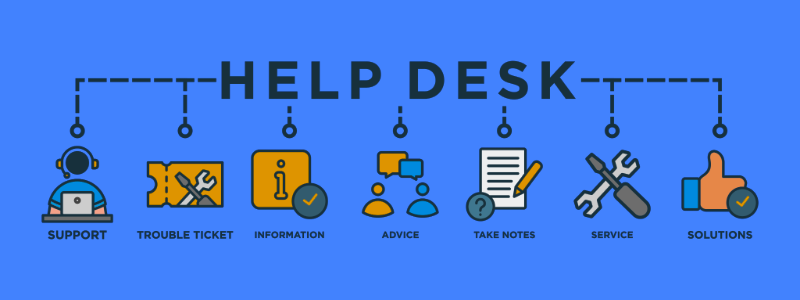
Why Businesses Choose to Outsource IT Help Desk Services
Many organizations rely on technology every day, but they may not have the staff to run a full help desk. As systems grow more complex, employees often need quick help when something breaks. Outsourcing IT help desk services gives businesses a way to maintain reliable support without building a full internal team.
Working with a provider gives companies access to trained technicians and the tools needed to solve common issues. Rather than hiring and training help desk staff themselves, businesses work with a team that already handles support every day. This often leads to faster responses and quicker problem-solving.
Outsourcing also helps keep support steady as a company grows. Many internal IT teams are small and must balance daily requests with larger projects. A dedicated help desk partner can handle routine issues while internal teams focus on improving systems and planning future upgrades.
Reducing Costs Without Reducing Support Quality
An internal IT help desk can cost more than many businesses expect. Companies must hire support staff, train them on internal systems, and give them the tools needed to solve everyday issues. They also need to plan ahead for employees who are out sick or leave the company.
Outsourcing IT help desk services can help control those costs. Service desks are highly labor-intensive, and industry benchmarking shows about 78% of help desk staff work directly in customer support roles.
Rather than building out a full department, businesses work directly with a provider that already has technicians, tools, and support systems in place. Outsourcing can reduce support costs in several ways:
- Lower staffing costs. Businesses do not need to hire and train a full internal help desk team.
- Access to shared tools and systems. Providers already maintain the platforms used to manage tickets and troubleshoot issues.
- Flexible support coverage. Companies can expand help desk support as they grow without adding more internal staff.
It also makes scaling easier as the organization grows. Help desk coverage can expand without hiring more internal staff. At the same time, contracts help keep support reliable through service level agreements (SLAs) and defined response times.
Keeping Employees Productive When Technical Issues Occur
Technical problems can interrupt work quickly. A slow computer, a locked account, or a software error can stop an employee from finishing even simple tasks. When these issues are not resolved quickly, lost time begins to add up across the organization. Some organizations have reduced average ticket resolution times from three hours to about twenty-five minutes after implementing structured help desk support.
A reliable help desk helps keep employees moving when problems occur. Instead of spending time trying to fix issues on their own, staff can reach out for quick assistance and get back to work sooner. Over time, faster support helps reduce downtime and keeps daily operations running more smoothly.
Access to Specialized IT Knowledge and Tools
Many businesses rely on a small internal IT team to manage their systems. Those teams often handle everything from device support to network issues and software updates. Keeping up with every platform, security risk, and support tool can be difficult for just a few people.
Outsourcing IT help desk services gives businesses access to more IT knowledge and better support tools. Providers work with many systems and technologies each day, which helps their technicians gain practical experience solving problems. This broader experience helps businesses fix issues faster and keep systems running smoothly.
Supporting Remote and Hybrid Work Environments
Remote and hybrid work have become common in many organizations as companies adopt more flexible work models. Employees may work from home, travel between offices, or connect from different locations during the week. When technical issues occur in these situations, it is not always possible for an internal IT team to provide immediate in-person help.
Outsourced IT help desk services help fill that gap. Employees can reach out for support from anywhere and receive assistance with device issues, account access, VPN connections, or software problems. This allows remote staff to stay productive while giving businesses a reliable way to support employees no matter where they work.
How Outsourced Help Desk Services Work Day to Day
Outsourced help desk support follows a clear process so issues are handled quickly and consistently. When an employee runs into a technical or security problem, they can submit a request through a ticket system, email, or phone call. This creates a support ticket that the help desk team can track from start to finish.
A typical help desk support process can look like this:
- An employee submits a support request. This may happen through a help desk portal, email, or phone call. The request creates a ticket that logs the issue.
- A technician reviews the problem. The help desk team begins troubleshooting common issues such as login problems, software errors, or device setup.
- More complex issues are escalated if needed. If the problem requires deeper expertise, it moves to another technician who specializes in that system.
- The issue is documented and resolved. The technician records the solution and closes the ticket once the problem is fixed.
Over time, this process helps build a record of common problems and solutions. That information helps support teams resolve issues faster while giving businesses better insight into the types of technical problems employees face.
Supporting Internal IT Teams With Outsourced Help Desk Services
Many businesses already have an internal IT team that manages company systems and security. These teams also help employees with everyday technical issues. Over time, support requests like password resets, device problems, and software questions can take up much of their day.
Outsourced help desk services help reduce that workload. The help desk team handles routine support requests while internal IT staff focus on larger projects and system improvements. This balance helps employees get faster support while giving internal teams more time to strengthen and manage the company’s technology.
Case Study: How We Improved Operations With IT Help Desk Services
One organization we worked with depended heavily on technology but handled IT support in an informal way. Employees often sent emails, made phone calls, or asked coworkers for help when something stopped working. Over time, this made it difficult to track support requests or see patterns in recurring issues.
We implemented centralized help desk services that gave employees a consistent way to request support. Requests moved through a single system so technicians could respond quickly and document each issue. As a result, employees began receiving help more quickly, and the organization gained clearer visibility into the technical problems affecting daily work.
Building a Reliable IT Support Strategy for the Future
As businesses grow, technology issues become harder to manage through informal support. Employees depend on devices, cloud platforms, and internal systems to complete daily work. Without a clear way to handle support requests, small problems can slow teams down and recurring issues can go unnoticed.
Help desk services give organizations a better way to manage those requests. Employees can quickly report issues when something breaks, and support teams can follow problems from start to finish. Over time, this creates better visibility into common issues and helps businesses improve how technology supports daily work.
For many organizations, outsourced help desk services are part of that strategy. They provide reliable support for employees while giving internal IT teams more time to focus on improving systems and planning future technology needs. ITonDemand helps businesses build this type of help desk structure so teams can stay productive and technology runs more smoothly.